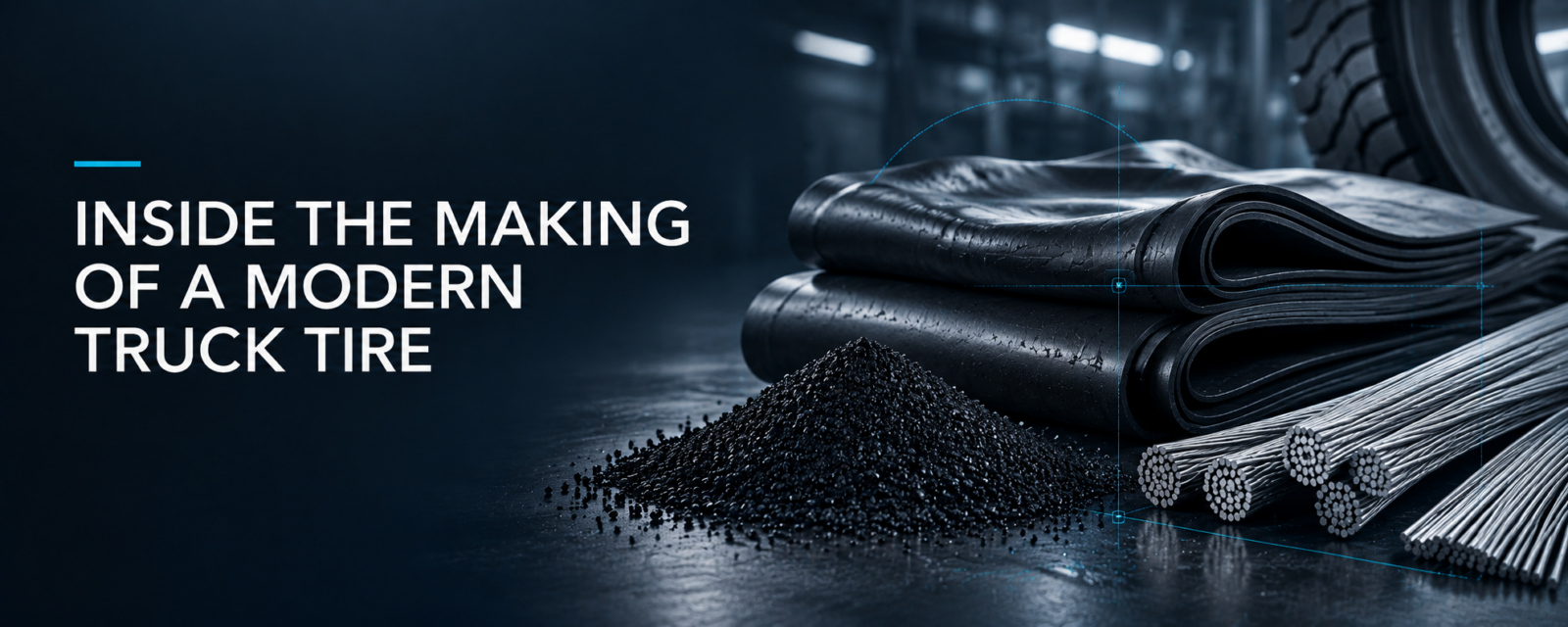


From a single drop of latex — one of the important raw materials behind a modern truck tire — to a heavy-duty tire running on highways, through cities and towns, or across mines and construction sites, every journey brings together nature, science, and manufacturing.
While much of the world is still asleep, work has already begun in the rubber plantations.
In the early morning, rubber tappers wearing headlamps make a thin cut in the bark of each tree. A milky white liquid slowly flows out, drop by drop, into a small collection cup.
A few hours later, the collected latex begins another journey. It goes through coagulation, rolling, drying, and other processing steps before becoming standardized blocks of natural rubber.
Every step matters. If the cut is too deep, the tree can be damaged. If the coagulation process is not properly controlled, impurities may remain in the rubber.
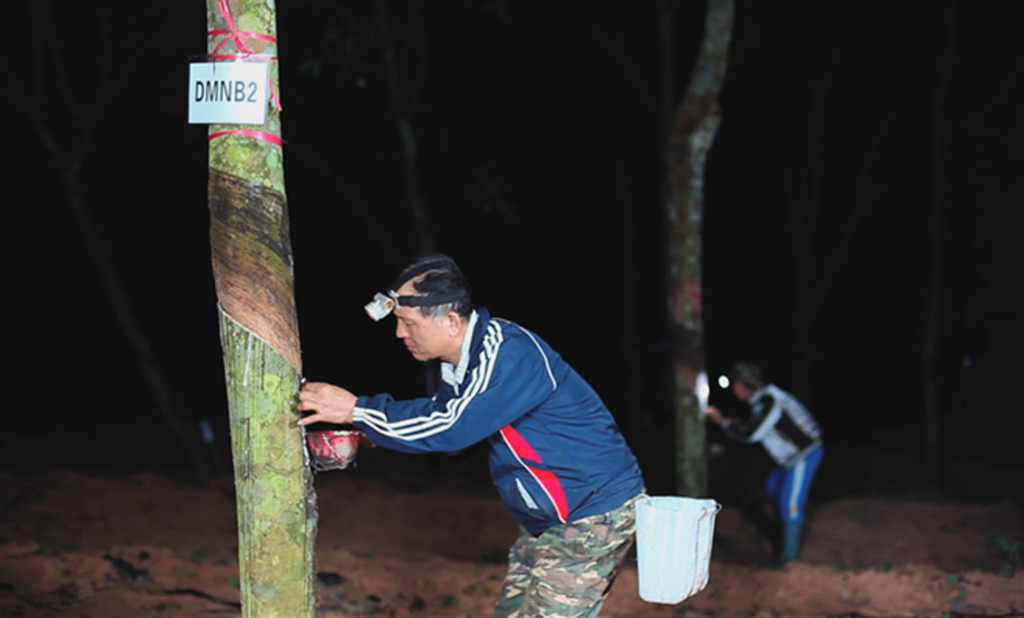
At NEXXUS Tires, we believe that understanding where natural rubber comes from is the first step toward understanding tire quality. Every drop of latex is a gift from nature, but it also carries the hard work of the people who grow and harvest rubber.
Natural rubber has excellent elasticity, but in its untreated form, it also has clear limitations. At high temperatures, it can become soft and sticky. At low temperatures, it may become hard and lose flexibility. In its natural state alone, rubber cannot meet all the demands of modern transportation.
A major turning point came in the 19th century with the development of vulcanization.
By combining natural rubber with sulfur and applying heat under controlled conditions, scientists discovered that sulfur could create cross-links between rubber molecular chains. Instead of moving freely past one another, the chains became part of a more stable network.
This changed the properties of rubber significantly. It became more resistant to heat and deformation and better able to withstand repeated mechanical stress.
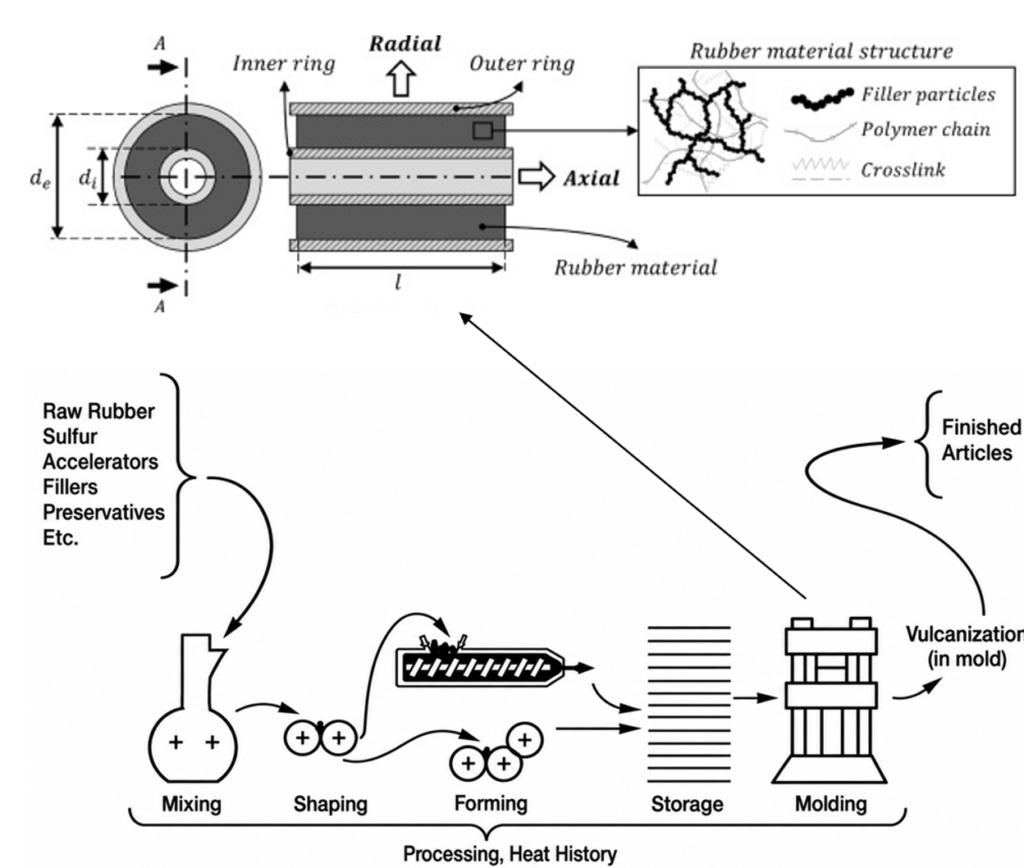
For NEXXUS, understanding this transformation is not simply about looking back at the history of rubber. It helps us understand the strength hidden within this material—and how that strength supports real transportation every day.
Making rubber usable is only the beginning.
The real challenge comes when that material becomes part of a truck and bus radial tire (TBR) that must carry heavy loads, travel long distances, and operate under very different road conditions.
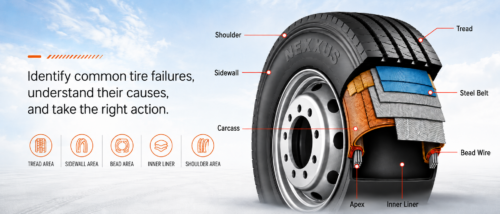
Natural rubber is only one part of this system. Modern Truck and Bus Radial (TBR) tires are far more than simple “rubber products.” They combine natural and synthetic rubbers, reinforcing fillers, steel materials, and many other compound ingredients and structural components.
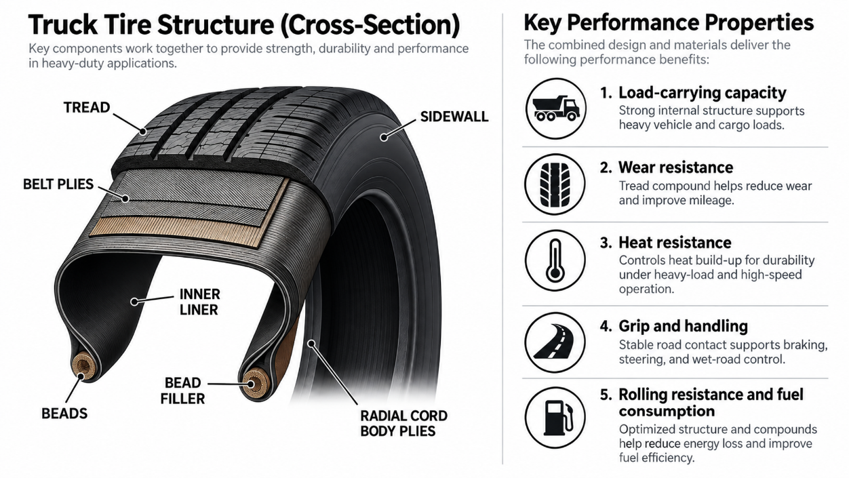
Every material and every layer have a specific job. The tread must resist continuous wear and road impact. The sidewall must withstand repeated flexing. The bead must securely connect the tire to the rim while transferring the load between them.
For truck tires working under heavy loads for long periods, the real challenge is not to maximize one single performance characteristic. It is to find the right balance between several important properties.
Load-carrying capacity
Truck and bus tires must remain structurally stable under heavy loads. The carcass, steel cords, belt package, and bead work together to form a strong supporting structure capable of carrying the combined weight of the vehicle and its cargo.
Wear resistance
Truck tires are constantly exposed to friction with the road. The wear resistance of the tread compound directly affects tread wear rate and overall tire mileage.
Heat resistance
During high-speed or heavy-load operation, heat can build up inside the tire. Excessive heat can accelerate rubber aging and, in severe cases, contribute to structural damage such as separation. Controlling heat build-up is therefore essential for long-term tire durability.
Grip and handling
Grip is the tire’s ability to maintain effective contact with the road, directly affecting acceleration, braking, and steering. On wet roads in particular, good water evacuation and stable road contact help maintain reliable handling and braking performance.
Rolling resistance and fuel consumption
As a tire rolls, it continuously deforms and recovers, causing a certain amount of energy loss. This is one of the main sources of rolling resistance. The higher the rolling resistance, the more energy the vehicle needs to keep moving. By optimizing rubber compounds and tire construction, unnecessary rolling resistance can be reduced, helping lower fuel consumption.
These performance requirements are often connected and sometimes work against each other. For example, improving wear resistance may affect grips, while a stronger structure designed for heavy loads may also create more heat. A reliable TBR tire is therefore the result of material selection, structural design, engineering experience, and continuous testing. The goal is to find the right balance between durability and flexibility, strength and efficiency, performance and cost.
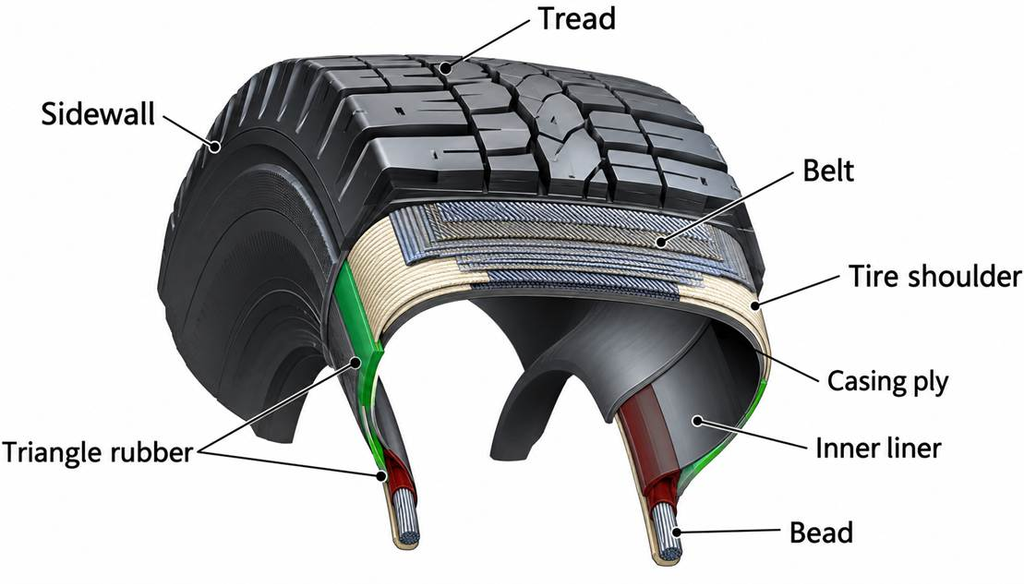
For NEXXUS, building a reliable TBR tire means finding the right balance for real-world applications. That balance guides our work in compound development, structural design, and product testing.
As a TBR manufacturer focused on heavy-duty transportation, NEXXUS understands a fundamental principle: true reliability does not come only from a final inspection certificate. It begins with respect for every material and every step in the manufacturing process.
We understand that the potential of natural rubber can only be fully developed through carefully designed compounds. That is why rubber formulations are optimized for different applications, balancing grip, wear resistance, and fuel efficiency.
We also understand the demanding structural requirements of heavy-duty transportation. Multi-layer steel belts and optimized bead designs help strengthen load-carrying capacity, stability, and retread ability.
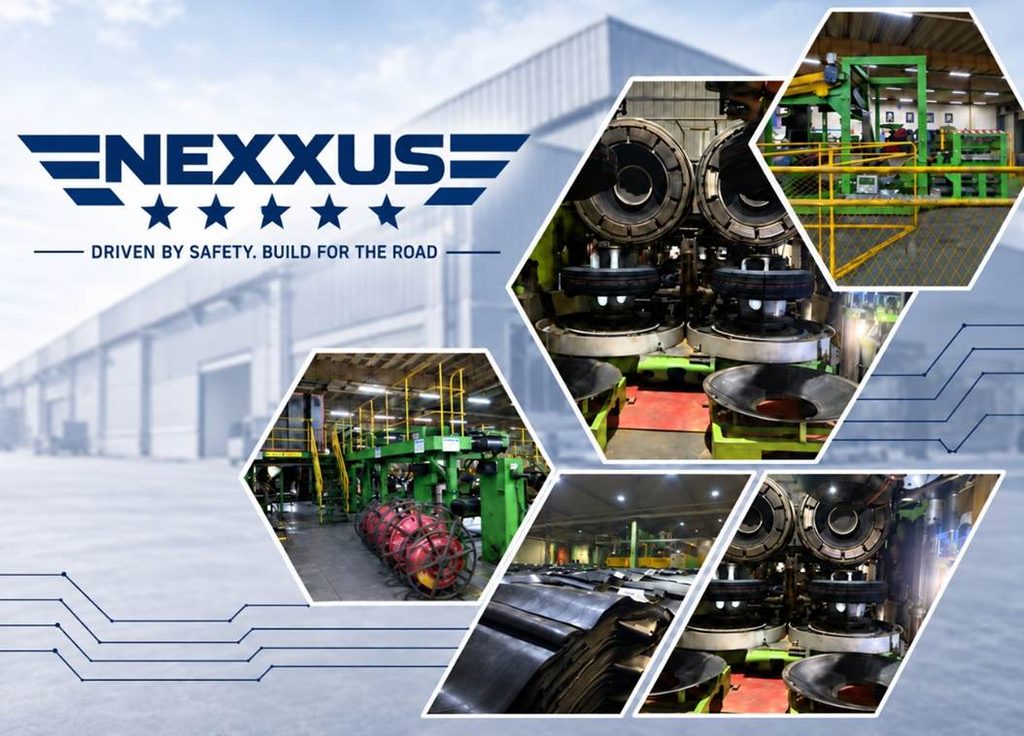
Quality is controlled throughout the manufacturing process—from raw material inspection and production monitoring to final tire testing, including X-ray inspection, dynamic balance, and uniformity checks.
Different road conditions also require different tire designs. Computer-aided design and FEA are used to optimize tread patterns, helping improve water evacuation and contact pressure distribution for different applications.
From a drop of white latex on a Hevea Brasiliense’s tree to a heavy-duty tire running across major transport routes, this journey of one important material connects the natural world with modern materials science and industrial manufacturing.
A tire is far more than a simple black ring.
It carries the gift of nature, more than a century of scientific progress, and the experience of modern manufacturing. And when a loaded truck sets out on the road, every rotation of its tires carries that long journey forward.
 Technology
 Technology
 Technology
 Technology
 Technology
 Technology
 Technology
 Technology

English

French

Lao

Mongolian

Spanish

Vietnamese
Fill out the form below and a member of our team will get back to you promptly.

Whether you're a distributor, fleet operator, or OEM partner, we'd love to discuss how NEXXUS can deliver value to your business. Get in touch with our global sales team today.