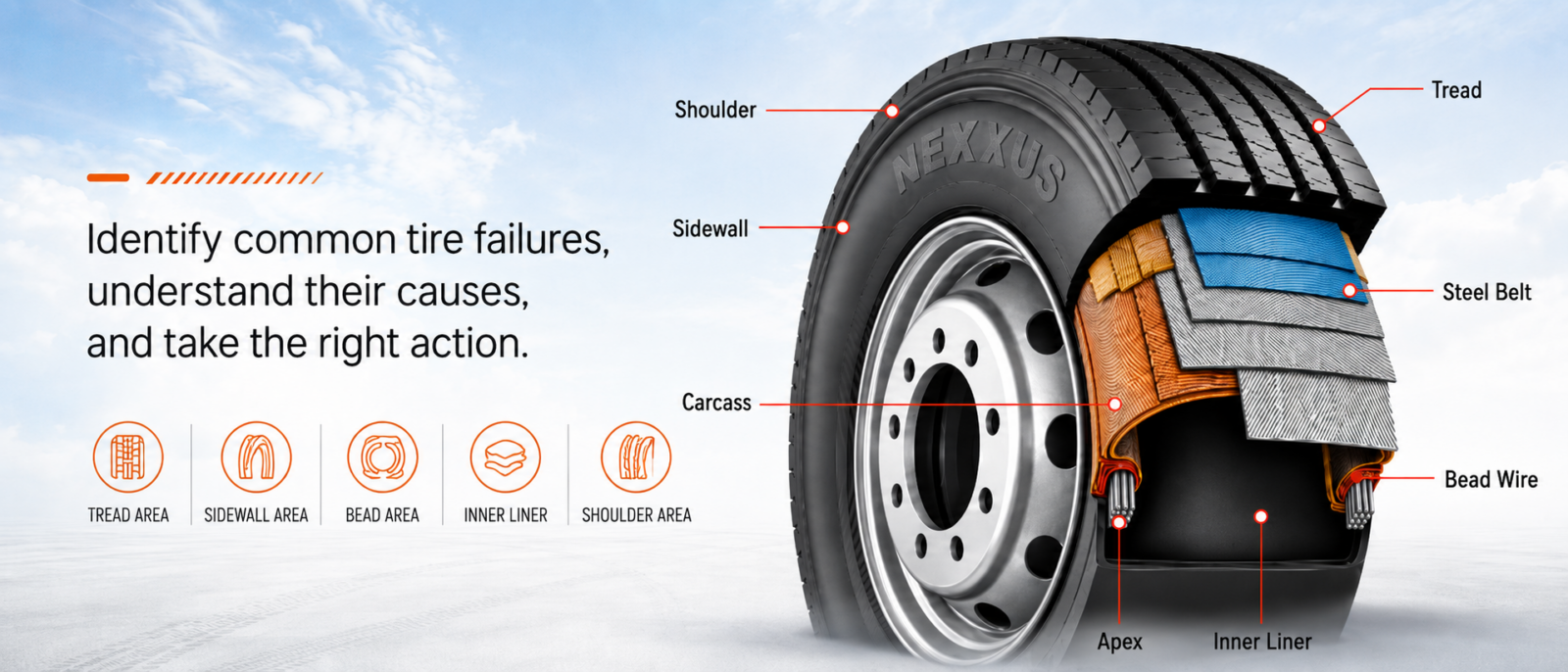
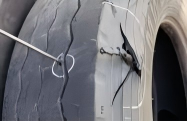
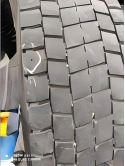
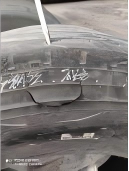
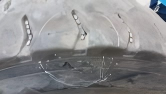
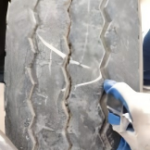
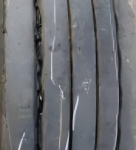
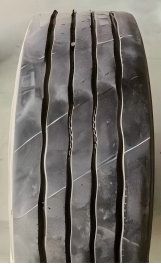
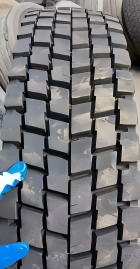
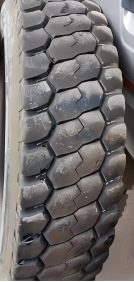
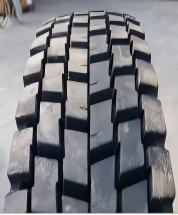
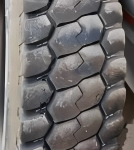
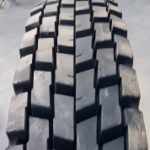
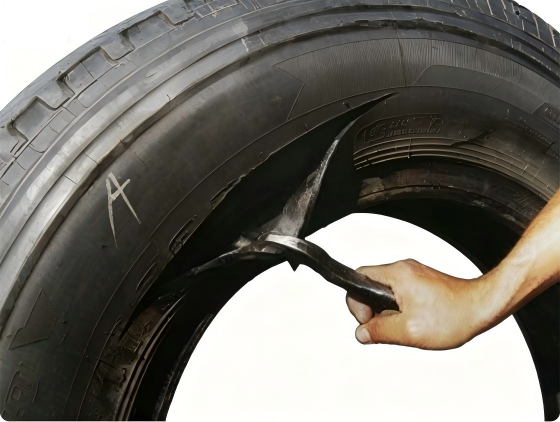
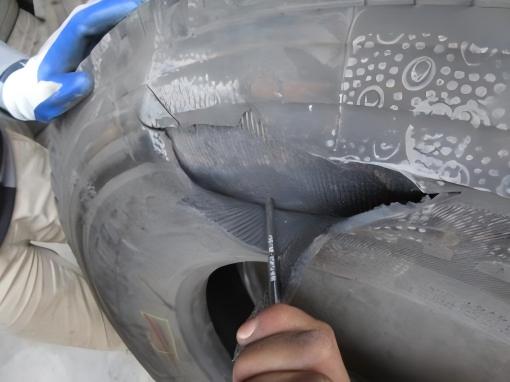
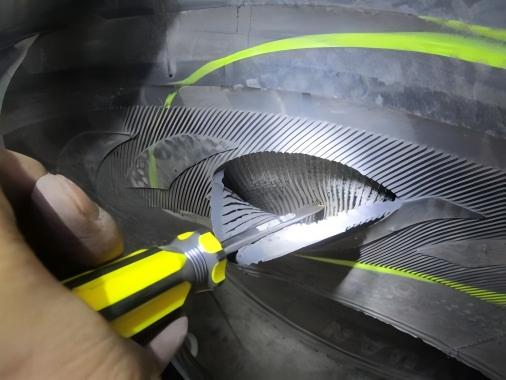
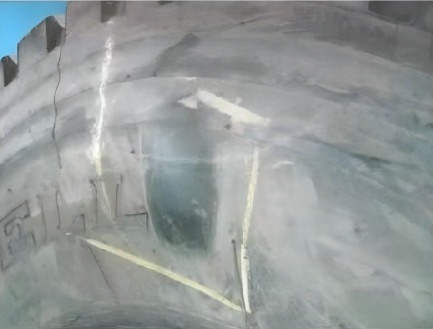
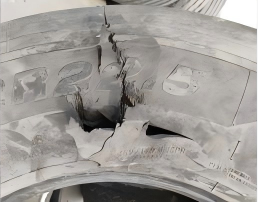
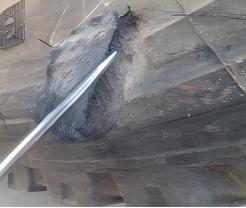
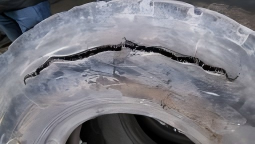
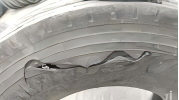
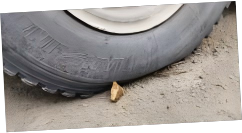
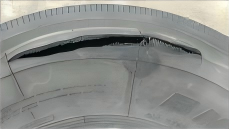
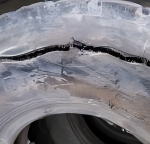
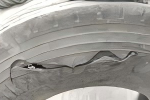
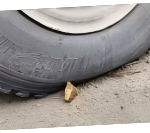
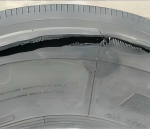
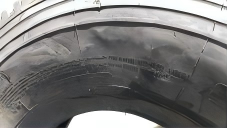
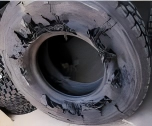
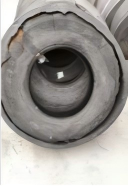
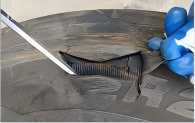
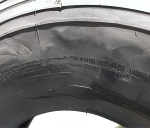
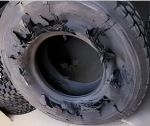
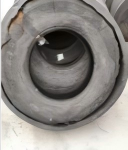
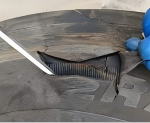
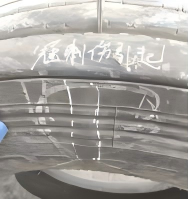
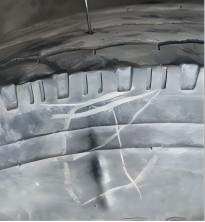
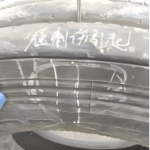
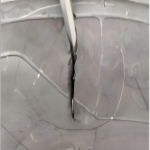
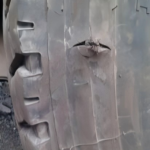
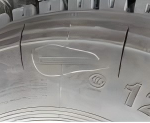
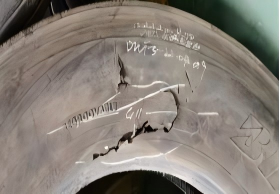
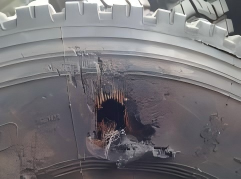
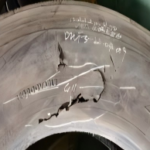
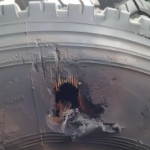
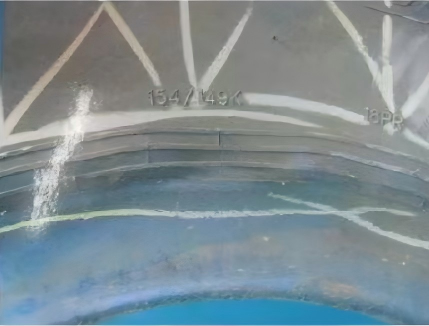
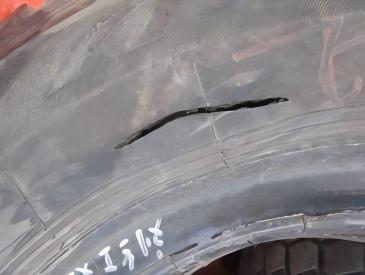
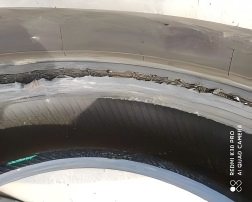
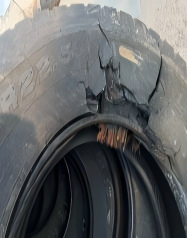
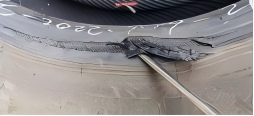
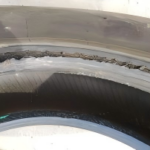
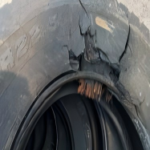
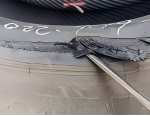
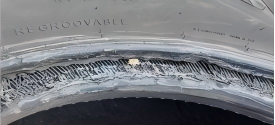
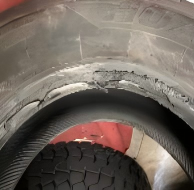
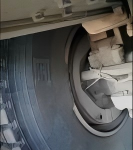
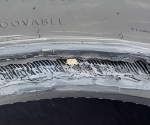
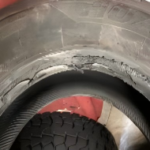
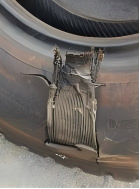
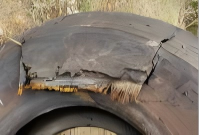
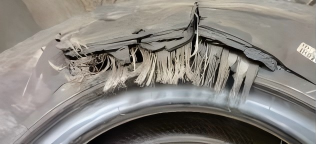
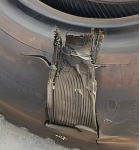
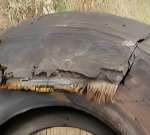
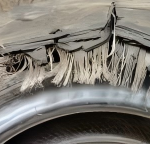
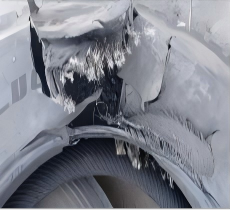
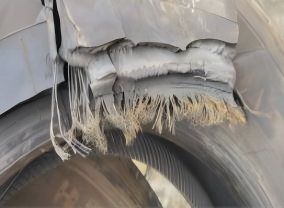
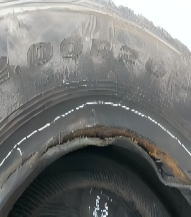
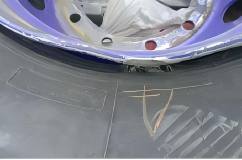
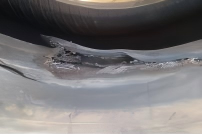
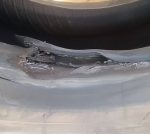
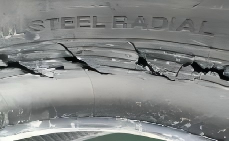
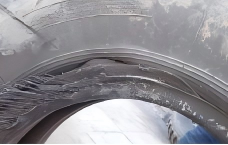
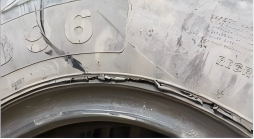
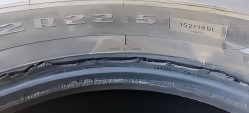
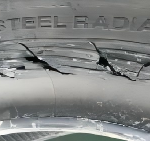
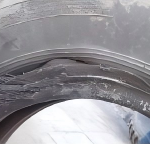
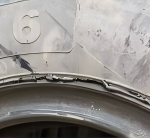
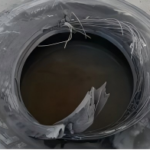
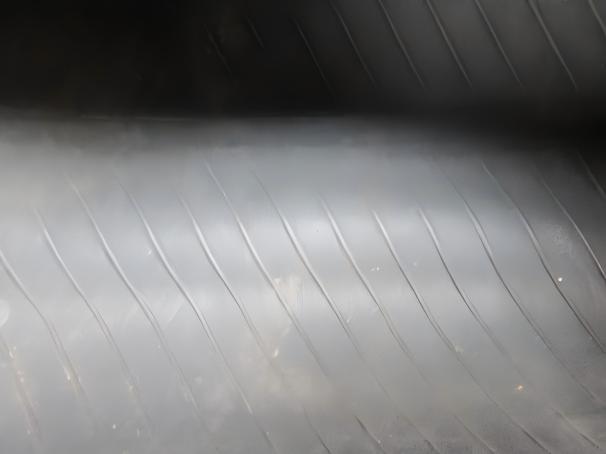
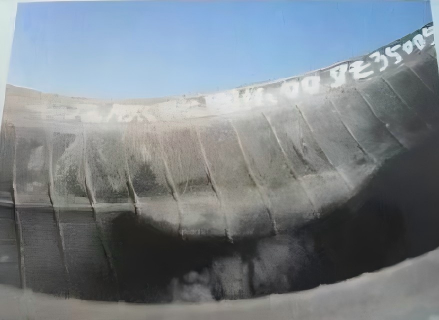
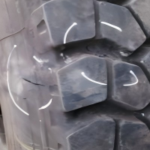
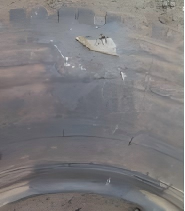
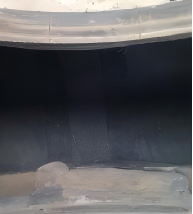
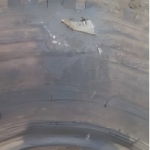
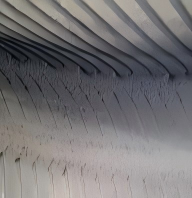
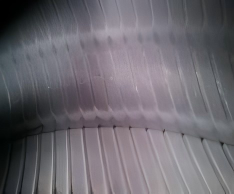
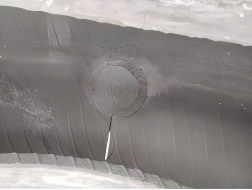
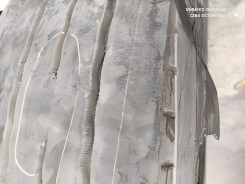
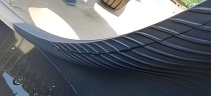
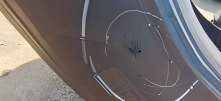
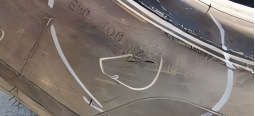
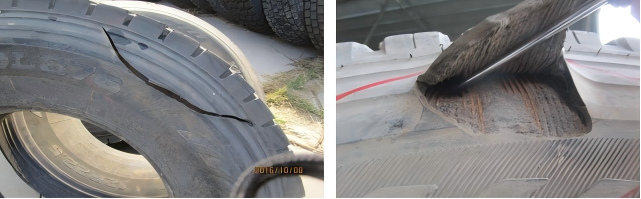
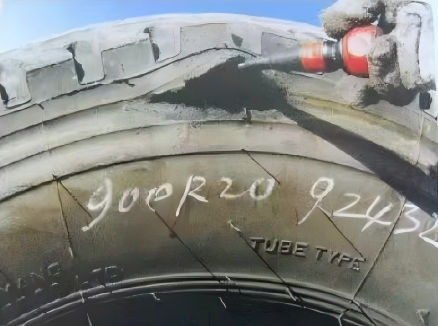
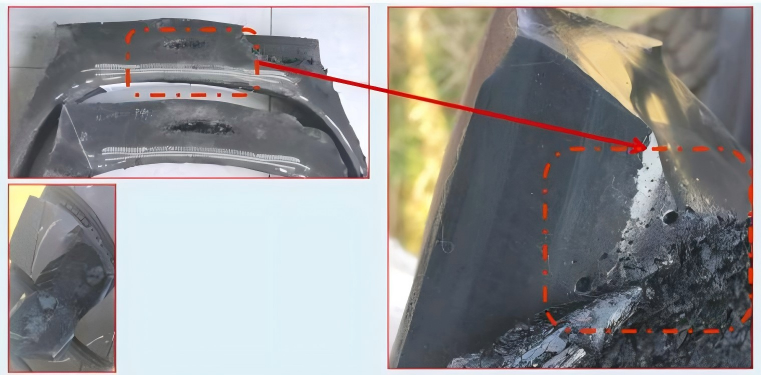
This is a pictorial guide to common truck tire issues. Its main purpose is to help tire retailers, distributors, and drivers identify and assess the nature of tire damage, and to distinguish between ‘non-quality-related issues’ (i.e., those caused by improper use, road conditions, external impact, or other factors) and ‘quality-related issues’ (i.e., those related to manufacturing defects).
We listed the characteristics and causes of various types of tire damage, and classify them accordingly.

Tread Area
01
Tread Area
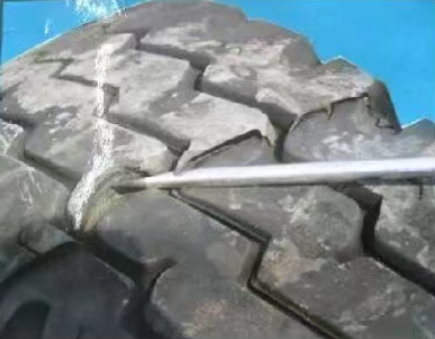
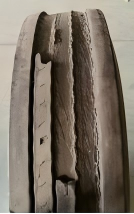
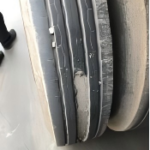
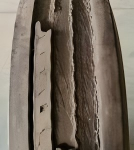
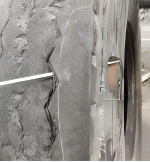
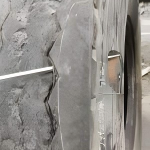
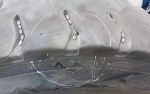
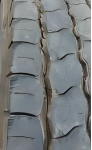
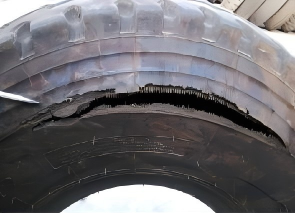
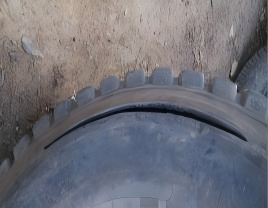
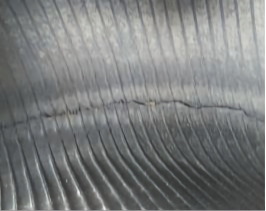
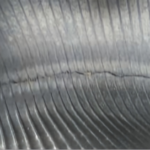
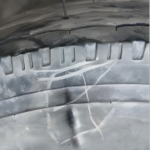
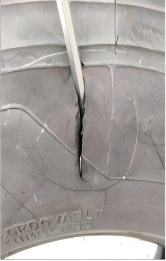
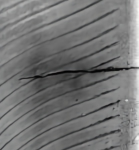
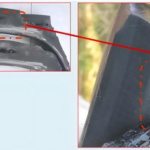
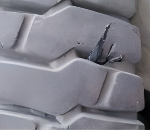
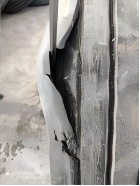
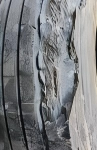
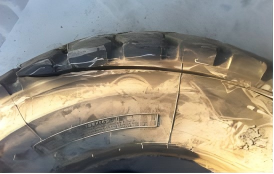
Splice Opening
Symptom Description
The splice opens in a sloped or stepped manner, with a smooth surface at the opened area.
Cause
Uneven splice surface or poor splice adhesion.
Liability
Quality-related Issue · Manufacturing Problem
Recommended Action
Remove the tire from service and submit it for inspection; advise the user to avoid overloading, overinflation, excessive speed, and impact with obstacles (e.g., potholes or ridges) to prevent recurrence.
Stop Using Tire
Submit Quality Claim
Keep Evidence
02
Tread Area
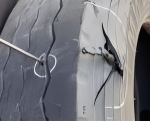
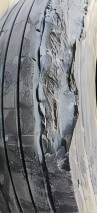
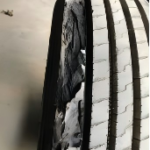
Tread Burst
Symptom Description
The tire tread area bursts due to external impact, causing the belt layers to break and become exposed. The fracture surface appears torn, with no signs of delamination.
Cause
The tire bursts when running under high inflation pressure, high load, or high speed conditions, and strikes an obstacle or forcefully crosses a pothole or ridge.
Liability
Non-quality-related Issue · Usage Problem
Recommended Action
Remove the tire from service and inspect inflation pressure, load condition, driving speed, and impact evidence. Advise drivers to avoid potholes, ridges, and obstacle impacts under high-speed or overloaded conditions.
Remove from Service
Check Inflation & Load
Driver Education
03
Tread Area
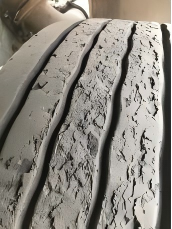
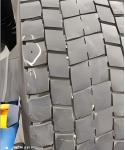
Tread Pitting/Chunking
Symptom Description
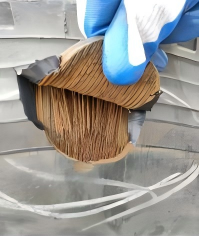
The tread surface exhibits fish-scale-like or fragmented rubber peeling, chunky loss, or flaking over the entire circumference or locally. In severe cases, belt layer steel cords may become exposed.
Cause
When the tire's inflation pressure is high, the tread rigidity increases. Under such conditions, driving on gravel roads, accelerating, or making emergency stops can cause gravel to pick or chunk out pieces of rubber from the tread
Liability
Non-quality-related Issue · Usage problem
Recommended Action
Remove the tire from service, submit it for inspection, and advise the user to avoid operating at excessive inflation pressure when driving on gravel roads or during aggressive acceleration/braking to prevent tread chunking and peeling.
Remove from Service
Inspection
Avoid Sharp Objects
04
Tread Area
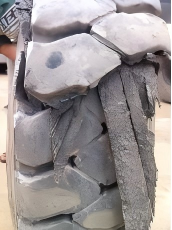
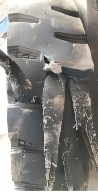
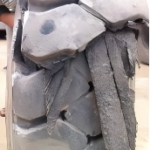
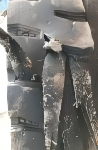
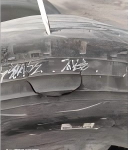
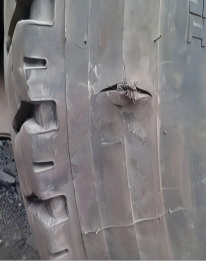
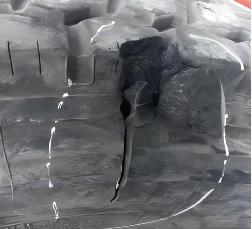
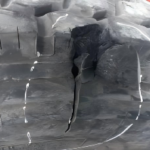
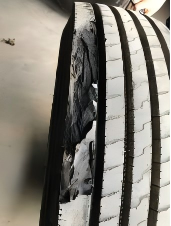
Tread Rib Detachment
Symptom Description
Tread pattern ribs are severely chipped, with partial or full strips torn off, exposing belt layers and steel cords. Puncture points can be clearly observed.
Cause
The tread pattern ribs are punctured or cut by sharp objects. Under the centrifugal force of tire rotation and subsequent rolling/compression by the rear wheels (in dual-fitment applications), the pattern ribs tear off. This condition most commonly occurs on rib-type tread patterns.
Liability
Non-quality-related Issue · Usage problem
Recommended Action
Remove the tire from service, submit it for inspection, and advise the user to avoid driving over sharp objects and to regularly check for punctures, especially on rib-type tread patterns and dual-fitment applications, to prevent tread tearing and belt exposure.
Remove from Service
Inspection
Avoid Sharp Objects
05
Tread Area
Tread Puncture Leading to Shoulder Separation
Symptom Description
The tire crown area is punctured or pierced by a sharp object. At the puncture site, there is shoulder separation or a radial bulge on the sidewall.
Cause
While the vehicle is in motion, the tire crown is punctured or pierced by a sharp object. Prolonged operation under this condition leads to delamination between components, and in severe cases, carcass cord breakage.
Liability
Non-quality-related Issue · Usage problem
Recommended Action
Remove the tire from service, submit it for inspection, and advise the user to avoid operating the vehicle with a punctured tire, as prolonged use under such conditions can cause internal delamination and cord breakage; prompt inspection and repair of any crown penetration are recommended.
Remove from Service
Prompt Inspection and Repair
Avoid Operating
06
Tread Area
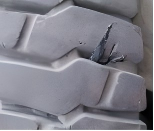
Groove Bottom Damage
Symptom Description
The bottom of the tread groove is punctured or cut, causing severe tearing of the groove-bottom rubber. Belt layers may become exposed, often accompanied by tread separation.
Cause
The tire encounters a sharp obstacle while the vehicle is in motion, causing a cut, or stones become trapped between tread ribs, leading to damage.
Liability
Non-quality-related Issue · Usage problem
Recommended Action
Remove the tire from service, submit it for inspection, and advise the user to avoid driving over sharp obstacles and to regularly clear stones trapped between tread ribs to prevent groove-bottom cuts, belt exposure, and tread separation.
Remove from Service
Inspection
Avoid Sharp Obstacles
Regularly Clear Stones
07
Tread Area
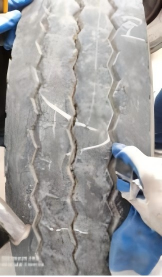
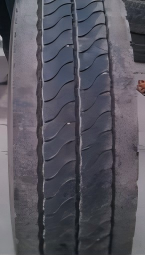
Diagonal (Heel/Toe) Wear
Symptom Description
Multiple diagonal wear patterns appear around the entire circumference of the tire. The wear direction forms an approximately 60-degree angle with the centerline of the tread.
Cause
Improper rim mounting; mismatched dual tire assemblies; poor vehicle condition, such as improper bearing adjustment or excessive toe�out (front alignment).
Liability
Non-quality-related Issue · Usage problem
Recommended Action
Remove the tire from service, submit it for inspection, and advise the user to check rim mounting, dual tire matching, wheel alignment (especially toe-out), and bearing adjustment to prevent diagonal wear recurrence.
Remove from Service
Inspection
Advise the User to Check
08
Tread Area
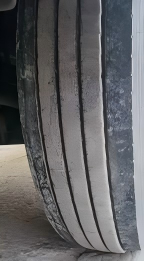
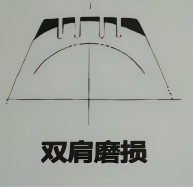
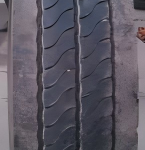
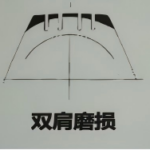
Dual-Shoulder Wear
Symptom Description
Both shoulders of the tire wear excessively around the entire circumference, becoming lower than the center tread ribs.
Cause
The tire is operated with excessively high inflation pressure, resulting in insufficient contact pressure at the shoulders. This condition is aggravated by prolonged driving with the vehicle unladen (no load).
Liability
Non-quality-related Issue · Usage problem
Recommended Action
Remove the tire from service, submit it for inspection, and advise the user to avoid operating with excessively high inflation pressure, especially when driving unladen for extended periods, to prevent accelerated shoulder wear.
Remove from Service
Avoid High Inflation Pressure
09
Tread Area
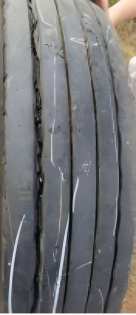
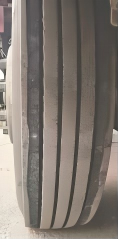
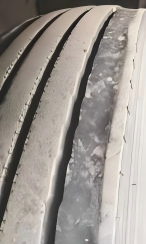
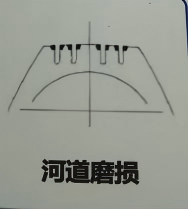
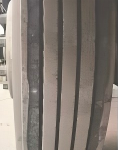
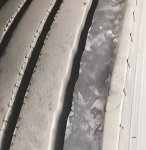
Channel Wear (Riverbed Wear)
Symptom Description
Circumferential wear occurs along the edges on both sides of the tread grooves, resembling an eroded riverbed. The wear in other areas of the tread remains normal.
Cause
Excessively high inflation pressure, frequent lane changes, excessive cargo height, or transporting loose/liquid cargoes that shift during transit.
Liability
Non-quality-related Issue · Usage problem
Recommended Action
Remove the tire from service, submit it for inspection, and advise the user to maintain proper inflation pressure, avoid frequent aggressive lane changes, and secure or balance loose/liquid cargo to prevent groove-edge circumferential wear.
Remove from Service
Submit it for Inspection
Maintain Proper Inflation Pressure
10
Tread Area
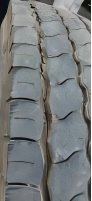
Scalloped (Cupping / Saw-tooth) Wear
Symptom Description
The edges of the tread pattern blocks exhibit a heel-and-toe wear pattern that is lower at the trailing edge and higher at the leading edge, creating a scalloped or fish-scale-like appearance along the circumference.
Cause
Inconsistent inflation pressure or outer diameter in dual-tire assemblies; frequent stop-start driving under heavy load and high-torque conditions; poor vehicle condition, such as insufficient suspension damping (e.g., weak shock absorbers or leaf springs).
Liability
Non-quality-related Issue · Usage problem
Recommended Action
Remove the tire from service, submit it for inspection, and advise the user to ensure consistent inflation pressure and outer diameter in dual assemblies, avoid frequent heavy-load stop-start driving, and check suspension components (e.g., shock absorbers or leaf springs) to prevent heel-and-toe or scalloped wear.
Remove from Service
Submit it for Inspection
Ensure Consistent Inflation Pressure
Sidewall Area
11
Sidewall Area
Bead Surface Circumferential Bulge with Internal Delamination
Symptom Description
During early tire service, circumferential delamination appears at the bead turn-up area. Pressing with a finger gives a noticeable spongy or air bubble feel.
Cause
During manufacturing, incomplete compaction between components leads to trapped air or the presence of a separating medium. Unreasonable turn-up height design, etc.
Liability
Quality-related Issue · Manufacturing Problem
Recommended Action
Stop using the tire and submit it for quality inspection, while retaining the tire, DOT code, installation position, mileage, inflation record, and load information for further claim evaluation.
Stop Using Tire
Submit Quality Claim
Keep Evidence
12
Sidewall Area
Sidewall Delamination and Blowout
Symptom Description
Delamination occurs between the sidewall rubber and the carcass, or between the sidewall rubber and the apex strip. The delamination interface appears smooth. The blowout is U-shaped, exposing the steel cord, which remains intact and shows no signs of external damage.
Cause
During manufacturing, air bubbles are trapped between components, or contaminants such as water or oil/gasoline are introduced. Poor adhesion between steel cord and rubber compound.
Liability
Quality-related Issue · Manufacturing Problem
Recommended Action
Stop using the tire and submit it for quality inspection, while retaining the tire, DOT code, installation position, mileage, inflation record, and load information for further claim evaluation.
Stop Using Tire
Submit Quality Claim
Keep Evidence
13
Sidewall Area
Sidewall Void (Quality Issue)
Symptom Description
Delamination occurs between the sidewall rubber and the carcass, or between the sidewall rubber and the apex strip, forming a bulge. No external damage is visible on the outer surface.
Cause
During manufacturing, insufficient stitching/rolling pressure leads to trapped air bubbles or the introduction of contaminants such as water or gasoline between components.
Liability
Quality-related Issue · Manufacturing Problem
Recommended Action
Stop using the tire and submit it for quality inspection, while retaining the tire, DOT code, installation position, mileage, inflation record, and load information for further claim evaluation.
Stop Using Tire
Submit Quality Claim
Keep Evidence
14
Sidewall Area
External Damage on Tire Sidewall
Symptom Description
The tire sidewall shows irregular wounds, with obvious scraping or abrasion marks on the surface.
Cause
During driving, the tire sidewall comes into contact with a sharp object, resulting in puncture, penetration, or subsequent bursting.
Liability
Non-quality-related Issue · Usage problem
Recommended Action
Remove the tire from service, submit it for inspection, and advise the user to avoid driving near sharp objects or obstructions that may contact the sidewall, as punctures or penetration can lead to bursting.
Stop Using Tire
Submit Quality Claim
Keep Evidence
15
Sidewall Area
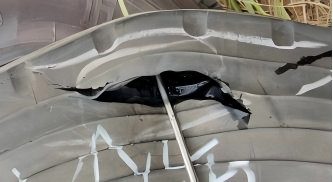
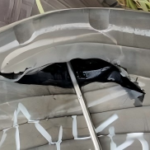
Cut-Induced Burst (Zipper Rupture)
Symptom Description
The sidewall is cut, causing the carcass to rupture. The tire bursts in a "zipper-like" pattern. At the cut location, the cord ends appear neat and cut-like. In other parts, the cord ends exhibit a necking/tapering phenomenon.
Cause: While driving, the tire sidewall is cut by an obstacle on the road under high inflation pressure, leading to a sudden burst.
Cause
While driving, the tire sidewall is cut by an obstacle on the road under high inflation pressure, leading to a sudden burst.
Liability
Non-quality-related Issue · Usage problem
Recommended Action
Remove the tire from service, submit it for inspection, and advise the user to avoid driving over sharp obstacles, especially under high inflation pressure, to prevent sidewall cuts and zipper�type bursts.
Remove From Service
Submit for Inspection
Avoid Drving over Sharp Obstacles
16
Sidewall Area
Zipper Burst (Zipper Rupture)
Symptom Description
The steel cords of the carcass are broken, and the tire sidewall shows a "zipper-like" burst pattern.
Cause
Prolonged parking under severe overload conditions, followed by instantaneous high-speed driving; or driving under low inflation pressure, leading to excessive flexural fatigue of the carcass cords and subsequent breakage.
Liability
Non-quality-related Issue · Usage problem
Recommended Action
Remove the tire from service, submit it for inspection, and advise the user to avoid prolonged parking under overload, sudden high-speed driving after overload, and operation under low inflation pressure to prevent carcass cord fatigue and zipper�type sidewall bursts.
Remove From Service
Submit for Inspection
Driver Education
17
Sidewall Area
Serrated / Jagged Burst
Symptom Description
The steel cords of the carcass exhibit an irregular circumferential burst pattern, and obvious puncture or penetration marks are visible at the burst location.
Cause
During driving, the tire sidewall is punctured by a sharp object on the road, causing the carcass cords to break and the tire to burst under high inflation pressure.
Liability
Non-quality-related Issue · Usage problem
Recommended Action
Remove the tire from service, submit it for inspection, and advise the user to avoid driving over sharp objects, as sidewall punctures under high inflation pressure can cause carcass cord breakage and an irregular circumferential burst.
Remove From Service
Submit for Inspection
Avoid Drving over Sharp Obstacles
18
Sidewall Area
Run-Flat Deformation, Sidewall Separation, or Burst
Symptom Description
The tire is deformed, and the carcass shows crease marks due to fatigue. In severe cases, the carcass appears twisted, with tread separation or burst.
Cause
Prolonged or long-distance operation of a severely underinflated (or fully deflated) tire leads to thermal fatigue fracture of the carcass cords from repeated excessive flexing, ultimately causing the tire to fail and burst from the sidewall.
Liability
Non-quality-related Issue · Usage problem
Recommended Action
Remove the tire from service, submit it for inspection, and advise the user to maintain proper inflation pressure at all times and avoid operating a severely underinflated or fully deflated tire, as prolonged use under such conditions causes carcass fatigue, creasing, and eventual sidewall burst.
Remove From Service
Submit for Inspection
Driver Education
19
Sidewall Area
Radial Bulge on Sidewal
Symptom Description
A radial bulge appears on the tire sidewall, with corresponding puncture or impact marks on the shoulder/crown area.
Cause
During driving, a sharp object punctures or impacts the shoulder/crown area, causing the carcass cords to be damaged, stretched, or broken. This results in a corresponding bulge on the sidewall.
Liability
Non-quality-related Issue · Usage problem
Recommended Action
Remove the tire from service, submit it for inspection, and advise the user to avoid driving over sharp objects or impacts that puncture or strike the shoulder/crown area, as internal carcass cord damage may cause a corresponding sidewall bulge
Remove From Service
Submit for Inspection
Avoid Drving over Sharp Obstacles
20
Sidewall Area
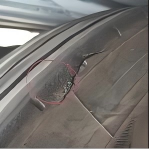
Sidewall Split / Radial Crack
Symptom Description
A radial crack or split appears on the tire sidewall.
Cause
The sidewall is radially punctured by a sharp object, or the shoulder is impacted by an obstacle, causing extreme sidewall deformation and subsequent splitting/cracking.
Liability
Non-quality-related Issue · Usage problem
Recommended Action
Remove the tire from service, submit it for inspection, and advise the user to avoid sidewall contact with sharp objects and shoulder impacts with obstacles, as these can cause extreme sidewall deformation leading to radial cracks or splits.
Remove From Service
Submit for Inspection
Avoid Drving over Sharp Obstacles
21
Sidewall Area
Remove From Service, Submit for Inspection, Avoid Drving over Sharp Obstacles
Symptom Description
Obvious marks of foreign object compression/friction are present on the tire sidewall. In severe cases, cord breakage or tire burst may occur.
Cause
Obvious marks of foreign object compression/friction are present on the tire sidewall. In severe cases, cord breakage or tire burst may occur.
Liability
Non-quality-related Issue · Usage problem
Recommended Action
Remove the tire from service, submit it for inspection, and advise the user to regularly inspect and clear foreign objects trapped between dual tires, as prolonged compression and friction can cause sidewall damage, cord breakage, or burst.
Remove From Service
Submit for Inspection
Driver Education
Bead Area
22
Bead Area
Bead Void
Symptom Description
During early service, circumferential or localized delamination appears at the bead turn-up area. Pressing with a finger gives a noticeable spongy or bubble feel.
Cause
During manufacturing, incomplete compaction between components leads to trapped air or the presence of a separating medium; or the turn-up height design is unreasonable.
Liability
Quality-related Issue · Manufacturing Problem
Recommended Action
Stop using the tire and submit it for quality inspection, while retaining the tire, DOT code, installation position, mileage, inflation record, and load information for further claim evaluation.
Stop Using Tire
Submit Quality Claim
Keep Evidence
23
Bead Area
Stop Using Tire,Submit Quality Claim,Keep Evidence
Symptom Description
Cracks often appear on the inner side of the bead, at the bead heel, or within the rubber layer. The cracks are typically fine, dense, uniform, and symmetrical.
Cause
Under-cure or over-cure, resulting in brittle rubber layers and insufficient strength.
Liability
Quality-related Issue · Manufacturing Problem
Recommended Action
Stop using the tire and submit it for quality inspection, while retaining the tire, DOT code, installation position, mileage, inflation record, and load information for further claim evaluation.
Stop Using Tire
Submit Quality Claim
Keep Evidence
24
Bead Area
Bead Fraying / Bead Abrasion (Rim Chafing)
Symptom Description
The bead filler / chafer rubber is squeezed and detached by the rim, exposing the reinforcement layer. In severe cases, the bead ply pulls out (bead unseating) and causes a burst.
Cause
Use of non-standard or deformed rims; overload; frequent driving on winding or hilly roads; excessively aggressive turning, starting, or stopping.
Liability
Non-quality-related Issue · Usage problem
Recommended Action
Remove the tire from service, submit it for inspection, and advise the user to use standard, undamaged rims, avoid overloading, and reduce aggressive turning, starting, or stopping—especially on winding or hilly roads—to prevent bead filler detachment, bead unseating, and potential burst.
Remove From Service
Submit For Inspection
Use Standard Rims
Avoid Overloading
25
Bead Area
Bead Burn (Heat-Induced Bead Damage)
Symptom Description
Charring/carbonization marks are present at the bead area. In severe cases, the carcass steel cords may pull out.
Cause
Malfunction of the vehicle's braking system, excessively high rim temperature, or frequent braking, leading to rubber detachment (peeling) at the tire bead area.
Liability
Non-quality-related Issue · Usage problem
Recommended Action
Remove the tire from service, submit it for inspection, and advise the user to check the braking system regularly, avoid frequent or excessive braking, and ensure rims are not overheating to prevent bead area charring, rubber detachment, and potential cord pull-out.
Remove from Service
Submit for Inspection
Check the Braking
26
Bead Area
Bead Wire Breakage and Burst (Circumferential Cord Break)
Symptom Description
The carcass steel cord ply shows neat/clean breakage in the upper area where the bead engages with the rim.
Cause
Under high inflation pressure and heavy load, the tire's internal pressure changes suddenly, resulting in excessive localized stress concentration at the bead area, causing the steel cords to break cleanly (circumferentially)
Liability
Non-quality-related Issue · Usage problem
Recommended Action
Remove the tire from service, submit it for inspection, and advise the user to avoid sudden pressure changes under high inflation pressure and heavy load conditions, as this can cause localized stress concentration at the bead area leading to clean circumferential cord breakage.
Remove from Service
Submit for Inspection
Avoid Sudden Pressure Change
27
Bead Area
Bead Cord Pull-Out Burst
Symptom Description
The steel cords of the carcass are pulled out, while the corresponding bead area shows no damage.
Cause
Driving under high load and high inflation pressure; use of non-standard rims; turning with an excessively small radius at excessive speed; or the tire encountering a pothole or bump, causing impact that pulls the carcass cords out, leading to burst.
Liability
Non-quality-related Issue · Usage problem
Recommended Action
Remove the tire from service, submit it for inspection, and advise the user to avoid high load and high inflation pressure conditions, use standard rims, reduce speed when cornering or encountering potholes/bumps, and prevent impact-induced cord pull-out and burst.
Remove from Service
Avoid High Load
Use Standard Rims
28
Bead Area
Bead Damage (Mechanical Cut / Rim Chafing Injury)
Symptom Description
The reinforcement layer (breaker) at the bead area is broken, exposing the tire's bead wire ring (steel cable).
Cause
Deformation of the rim flange (the outer lip of the wheel) or a cracked/ruptured rim edge, which cuts and damages the tire bead.
Liability
Non-quality-related Issue · Usage problem
Recommended Action
Remove the tire from service, submit it for inspection, and advise the user to inspect rims regularly for flange deformation, cracks, or damage, as faulty rims can cut the bead reinforcement layer and expose the bead wire ring.
Remove from Service
Submit Inspection
Inspet Rims
29
Bead Area
Lower Bead Cracking (Below the Chafer / Rim Line)
Symptom Description
Irregular circumferential or localized cracks appear between the area below the tire's water/chafer line and the rim contact surface.
Cause
Use of a non-standard rim; high load combined with high inflation pressure causing the flex point to shift downward. The deformed rim flange then impacts/stresses the bead area, leading to cracking.
Liability
Non-quality-related Issue · Usage problem
Recommended Action
Remove the tire from service, submit it for inspection, and advise the user to use standard, undamaged rims and avoid high load combined with high inflation pressure, as these conditions can shift the flex point downward and cause rim flange-induced bead cracking below the chafer line.
Remove from Service
Use Standard Rims
Avoid High Load
30
Bead Area
Bead Ring Wire Breakage (Bead Hoop Fracture)
Symptom Description
The tire bursts, and the bead wire ring (steel cable hoop) is fractured/broken.
Cause
Overloaded vehicle subjected to a severe external impact, causing a sudden extreme increase in localized stress at the bead area; improper tire mounting/assembly, resulting in damage to the bead area; excessive rim fatigue or rim burst, which damages the tire bead.
Liability
Non-quality-related Issue · Usage problem
Recommended Action
Remove the tire from service, submit it for inspection, and advise the user to avoid overloading and severe impacts, ensure proper tire mounting to prevent bead damage, and inspect rims regularly for fatigue or damage to prevent bead wire ring fracture and burst.
Remove from Service
Avoid Overloading
Inspect Rims
Tire Inner Liner
31
Tire Inner Liner
Delamination between the Reinforcement Layer End and the Inner Liner
Symptom Description
Delamination occurs between the reinforcement layer end and the inner liner on the inner side of the bead, causing the inner liner to bulge. After dissection, the interface appears smooth.
Cause
During manufacturing, insufficient pressure bonding between components, or the presence of moisture, gasoline, etc.
Liability
Quality-related Issue · Manufacturing Problem
Recommended Action
Stop using the tire and submit it for quality inspection, while retaining the tire, DOT code, installation position, mileage, inflation record, and load information for further claim evaluation.
Stop Using Tire
Submit Quality Claim
Keep Evidence
32
Tire Inner Liner
Inner Liner Wire Exposure
Symptom Description
On the inner liner near the shoulder and sidewall areas, the arrangement of carcass steel cords is clearly visible locally or around the entire circumference.
Cause
During the curing process, irregular flow of the inner liner compound or dimensional non-conformance of semi-finished components such as the tread or cushion compound results in poor adhesion between the inner liner compound and the carcass cords, leading to delamination and exposed cords.
Liability
Quality-related Issue · Manufacturing Problem
Recommended Action
Stop using the tire and submit it for quality inspection, while retaining the tire, DOT code, installation position, mileage, inflation record, and load information for further claim evaluation.
Stop Using Tire
Submit Quality Claim
Keep Evidence
33
Tire Inner Liner
External Impact, Internal Cracking
Symptom Description
A radial crack is present on the tire's inner liner surface, with a torn/ruptured appearance at the crack face.
Cause
While driving, the tire encounters a pothole, bump, or is struck by a foreign object, causing instantaneous excessive deformation of the tire, resulting in inner liner cracking and radial bursting at the shoulder.
Liability
Non-quality-related Issue · Usage problem
Recommended Action
Remove the tire from service, submit it for inspection, and advise the user to avoid driving over potholes, bumps, or foreign objects that can cause sudden excessive tire deformation, leading to inner liner cracking and radial shoulder burst.
Stop Using Tire
Submit Inspection
Driver Education
34
Tire Inner Liner
Hot Patch Repair (Spot Curing Repair)
Symptom Description
An obvious indentation/impression is present on the tire sidewall, with a corresponding repair patch on the inner liner.
Cause
The crown, shoulder, or sidewall was punctured or damaged by a foreign object, and a manual repair was performed using semi-mold vulcanization (hot patch / spot curing method).
Liability
Non-quality-related Issue · Usage problem
Recommended Action
Remove the tire from service, submit it for inspection, and advise the user that any puncture or damage requiring repair should be properly assessed by a qualified professional, as improper or semi-mold vulcanization repairs may leave visible sidewall indentations and compromise tire integrity.
Stop Using Tire
Submit Inspection
Driver Education
35
Tire Inner Liner
Inner Liner Run-Flat Creasing / Flex Damage
Symptom Description
Obvious circumferential crease marks are present on the inner liner. In severe cases, steel cords may penetrate through the inner liner.
Cause
The tire was used under severe underinflation or extreme overload conditions, causing excessive sidewall flexing and fatigue.
Liability
Non-quality-related Issue · Usage problem
Recommended Action
Remove the tire from service, submit it for inspection, and advise the user to maintain proper inflation pressure and avoid extreme overload, as underinflation or overloading causes excessive sidewall flexing, leading to inner liner crease marks and potential steel cord penetration.
Remove from Service
Maintain Proper Inflation Pressure
Avoid Overload
36
Tire Inner Liner
Shoulder Separation at Repair Pad Location
Symptom Description
Shoulder separation (void/blister) is present, with a corresponding repair pad on the inner liner.
Cause
After the crown was punctured by a sharp object and manually repaired, impurities or trapped air remained between the components. As the tire rolled and temperature continuously increased, the components eventually separated, leading to a burst.
Liability
Non-quality-related Issue · Usage problem
Recommended Action
Remove the tire from service, submit it for inspection, and advise the user to ensure any crown puncture repair is performed properly without trapped air or impurities, as improper repair can lead to component separation, shoulder blistering, and eventual burst.
Remove from Service
Crown Puncture Repair
Improper repair
37
Tire Inner Liner
Bead Void/Separation Caused by Inner Liner Scratch
Symptom Description
Bead void/separation (hollow area) is present, with a corresponding scratch mark on the inner liner.
Cause
During tire mounting/installation, the tire mounter (mounting head) scratched the inner liner at the bead area. While driving, air continuously permeated along the steel cord gaps, forming air pockets that impacted the sidewall rubber, eventually causing the air to burst through the sidewall rubber.
Liability
Non-quality-related Issue · Usage problem
Recommended Action
Remove the tire from service, submit it for inspection, and advise the user to ensure proper tire mounting procedures are followed to avoid scratching the inner liner at the bead area, as such damage can allow air permeation along steel cords, leading to air pocket formation and eventual sidewall rubber burst.
Remove from Service
Submit for Inspection
Proper Tire Mounting Procedures
38
Tire Inner Liner
Underinflation Cracking
Symptom Description
Radial cracks are clearly visible on the inner liner near the shoulder and sidewall areas, either locally or around the entire circumference.
Cause
The tire was driven for an extended period under low inflation pressure, causing excessive internal temperatures that weakened the performance/integrity of the inner liner.
Liability
Non-quality-related Issue · Usage problem
Recommended Action
Remove the tire from service, submit it for inspection, and advise the user to maintain proper inflation pressure at all times, as prolonged low-pressure operation generates excessive internal heat that weakens the inner liner and leads to radial cracking.
Remove from Service
Proper Inflation Pressure
Prolonged Low-pressure Operation
Shoulder Area
39
Shoulder Area
Shoulder Blowout
Symptom Description
The rupture is located in the middle area between the tread and sidewall. The rubber inside the shoulder separates from the fabric layer(s). The cord fabric shows a neat, even break. (Note: Exposed wires on the inside may be determined as a non-quality-related issue.)
Cause
Poor adhesion between the shoulder compound and the fabric layer(s); under-cure or over-cure resulting in incomplete vulcanization, leading to a spongy structure, voids, or delamination.
Liability
Quality-related Issue · Manufacturing Problem
Recommended Action
Stop using the tire and submit it for quality inspection, while retaining the tire, DOT code, installation position, mileage, inflation record, and load information for further claim evaluation.
Stop using the tire
submit it for inspection
retaining the information
40
Shoulder Area
Under-cure (Quality Issue)
Symptom Description
Shoulder delamination accompanied by circumferential cracking, with the exudation of rubber crumbs and solvent-like substances. After dissection, the exudate at the delamination area feels sticky to the touch.
Cause
Under-cure, or volatile solvent not fully dried during tire building.
Liability
Quality-related Issue · Manufacturing Problem
Recommended Action
Stop using the tire and submit it for quality inspection, while retaining the tire, DOT code, installation position, mileage, inflation record, and load information for further claim evaluation.
Stop using the tire
submit it for inspection
retaining the information
41
Shoulder Area
Shoulder Puncture and Burst
Symptom Description
The belt layer ends are exposed at the shoulder area. In severe cases, carcass steel cords are broken, and there are clear puncture marks on the surface.
Cause
While the vehicle is in motion, the tire is punctured by a sharp object, severing the belt layers or carcass cords, resulting in a burst at the puncture site.
Liability
Non-quality-related Issue · Usage problem
Recommended Action
Remove the tire from service, submit it for inspection, and advise the user to avoid driving over sharp objects and to promptly repair or replace any punctured tire, as continued operation may cause belt or carcass cord breakage and lead to a burst.
Remove from service
submit it for inspection
avoid sharp objects
42
Shoulder Area
Shoulder Cut Leading to False Separation
Symptom Description
The tire shoulder exhibits a condition resembling shoulder separation due to a cut or abrasion. The interface appears torn, rather than showing delamination between components.
Cause
The tire shoulder is cut by a sharp object or scrapes against an obstacle, creating a wound. As the tire rolls, repeated friction within the wound causes the crack to continuously propagate.
Liability
Non-quality-related Issue · Usage problem
Recommended Action
Remove the tire from service, submit it for inspection, and advise the user to avoid contact with sharp objects or abrasive obstacles, as cuts or scrapes can propagate under repeated rolling friction and mimic structural separation.
Remove from service
submit it for inspection
avoid sharp objects
43
Shoulder Area
Shoulder Tear (Pry-Out Damage)
Symptom Description
The shoulder area is cut by an obstacle or subjected to excessive force, resulting in obvious tearing marks or localized breakage/fracture at the shoulder.
Cause
During operation, excessive speed, taking corners too sharply, or encountering an obstacle causes the bottom of the tread groove to pry open or tear.
Liability
Non-quality-related Issue · Usage problem
Recommended Action
Remove the tire from service, submit it for inspection, and advise the user to avoid excessive speed, sharp cornering, and impact with obstacles to prevent shoulder tearing or groove-bottom rupture.
Remove from service
submit it for inspection
avoid sharp objects and excessive speed
44
Shoulder Area
Shoulder Cut
Symptom Description
Circumferential cut on the tire shoulder, exposing the carcass steel cord.
Cause
The tire is cut by an obstacle during operation; in severe cases, this may cause a blowout at the cut.
Liability
Non-quality-related Issue · Usage problem
Recommended Action
Remove the tire from service, submit it for inspection, and advise the user to avoid driving over sharp obstacles to prevent shoulder cuts that may expose carcass cords or cause a blowout.
Remove from service
submit it for inspection
avoid sharp objects and excessive speed
45
Shoulder Area
Shoulder Separation and Broken Cords
Symptom Description
Separation between the sidewall rubber and the carcass steel cords, with broken cords.
Cause
During rotation, the tire shoulder impacts obstacles or encounters potholes/ridges, causing the carcass cords to stretch or break.
Liability
Non-quality-related Issue · Usage problem
Recommended Action
Remove the tire from service, submit it for inspection, and advise the user to avoid impacting obstacles, potholes, or ridges to prevent sidewall-carcass separation and cord breakage.
Remove from Service
Submit for Inspection
Advise the User